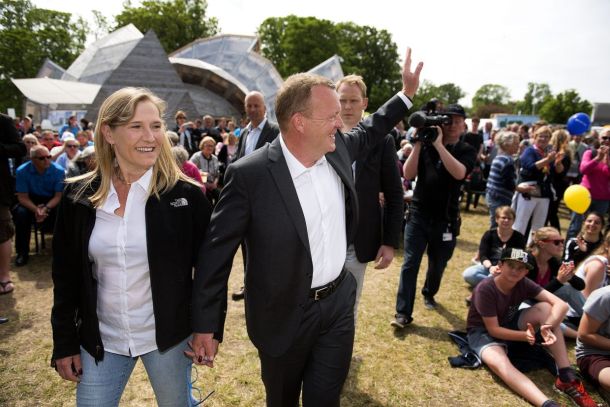
Walking in Copenhagen I bumped into the prime minister and his dogs. No-one else seemed to be playing him the slightest attention. With such a relaxed relationship to their politicians, in Denmark this was no surprise…
Xander Brett
Every year many Danes flock to the island of Bornholm for Folkemødet, a sort of country show with rings full not of cows, but politicians. Party leaders are given a platform to discuss their policies in a setting typical of the relaxed relationship Danes hold with their leaders. It is perfectly possible, if one happens to see him around, to strike up a conversation. This is exactly what I did last month in Copenhagen, when I spotted him on the way back to my hotel. Although nobody else was playing him the slightest bit of attention, I decided it might be rather fun to meet him, so I hung around chatting to his protection officers, waited for him to finish his interview, then had a brief chat.
Denmark, a country of just a few million, is a nation where its inhabitants are never more than a few handshakes away from each other. Over 70 per cent of Danes have seen their queen, compared with fewer than 50 per cent of Brits, and Denmark has avoided lapses in their leaders’ security. The attention played to Denmark’s comparatively low-powered government is striking. Which country of the same size airs political talk shows on major channels at prime time? And which nation of the same size has produced a political thriller with the same calibre as Borgen, now an international success reportedly enjoyed by leaders from David Cameron to François Hollande?
“The attention played to Denmark’s comparatively low-powered government is striking. Which country of the same size airs political talk shows on major channels at prime time? And which nation of the same size has produced a political thriller with the same calibre as Borgen, now an international success reportedly enjoyed by leaders from David Cameron to François Hollande?”
Some suggest the tendency for Danes to cosy up with their politicians goes as far back as the Schleswig-Holstein wars in the 1800s. On defeat, far from venting anger at their leaders’ humiliation – about a quarter of Danish territory was handed over to Germany – Danes simply became more sympathetic to their leaders, seeing the benefits of sticking together to salvage what was left.
The parliamentary elections of 2015 saw 85.8 per cent of the electorate go to the polls. The UK’s snap election last year, hailed by some as one of the most important in history, saw a turnout of just 68.8 per cent. Certainly Britain is a much larger country, perhaps with a more centralised and removed system as a result – it’s hard to imagine bumping into Theresa May – but I believe the sense of obligation Danes have to maintain a close working relationship with their leaders is something, in these turbulent times particularly, the UK, and other countries, could strongly benefit from.
This article is a Fika Online exclusive.
 Fika
Fika 