
Nowadays it seems you can add a ‘noir’ label to just about anything. So far, though, none of these labels have got close to challenging ‘Nordic Noir’. But if last week’s Edinburgh Book Festival is anything to go by, Scotland’s ‘Tartan Noir’ may be on the way up…
Xander Brett
William McIlvanney’s first Laidlaw novel, published in 1977, is generally considered the Tartan Noir starting post. He published a second Laidlaw novel, The Papers of Tony Veitch, in 1983, and a third, Strange Loyalties, in 1991.
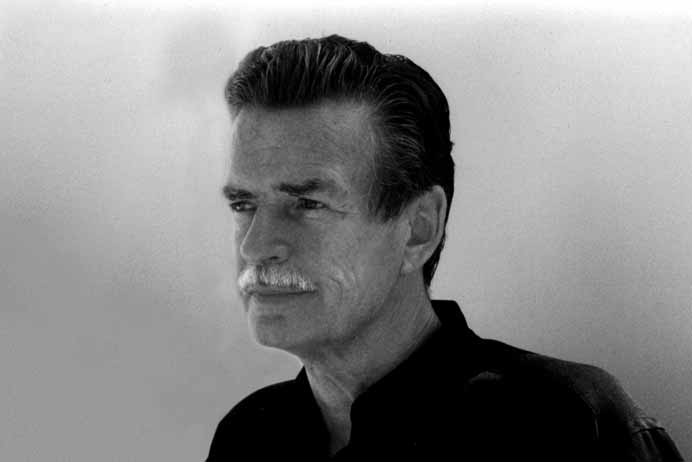
William McIlvanney: ‘grandfather’ of ‘Tartan Noir’
Writing in The Spectator, novelist Allan Massie calls the Laidlaw books “unconventional”. “McIlvanney,” he says, “did for Glasgow what Chandler had done for Los Angeles: he gave the city its fictional identity. Hemingway used to say that all American literature came out of Huckleberry Finn; all Scottish crime writing – ‘Tartan Noir’ – comes out of Laidlaw.”
European fiction might have still been obsessed with the ‘Golden Age’ of Agatha Christie-style whodunits. McIlvanney’s work – in the first Laidlaw novel he gives the murderer’s identity on page one – was different, his books more whydunits than whodunits.
Ian Rankin is now considered the genre’s father. His Rebus novels total 20 and have been translated into 26 different languages, adapted into a long-running series starring John Hannah and Ken Stott.
This article is a Fika Online exclusive.
 Fika
Fika 