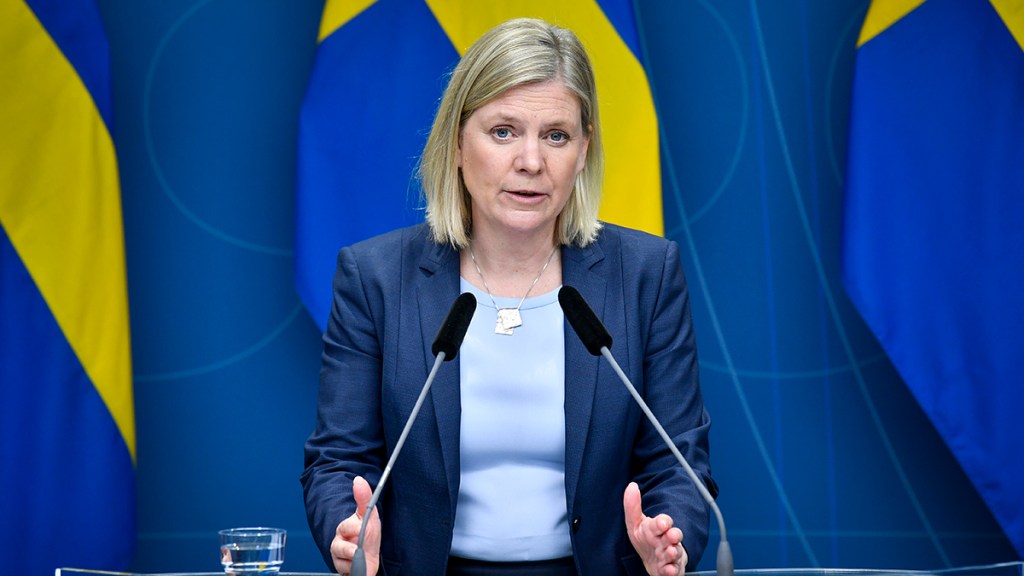
The Swedish Parliament approved its first female prime minister on Wednesday, but when her budget was rejected, she resigned before she could be sworn in. Trying again this week, Magdalena Andersson’s premiership is likely to be a policy continuation of the incumbent Stefvan Löfven…
Why the change?
Prime Minister Löfven has been in position since 2014, taking over from the Moderate Fredrik Reinfeldt. He spent months trying to form a government after re-election in 2018 and faced two no-confidence motions. Speaking to Fika Online, James Savage (Editor of The Local network) said the fact Sweden is the last country in the Nordic region to have a female prime minister (many of the rest have had two by now) is down to bad luck. “If you look back to Anna Lindh, the foreign minister in the early 2000s,” he explains, “she, if she hadn’t been assassinated, was very likely to have been Göran Persson’s successor as prime minister. We’ve had a female leader of both main political parties (the Social Democrats and Moderates).”
Who is she?
Magdalena Andersson attended the Stockholm School of Economics and spent time at Harvard. After serving as political advisor for Prime Minster Persson, and as a civil servant in other departments, then as Chief Director of the Swedish Tax Agency, she became the first European in a decade, and first female, to chair the advisory committee of the International Monetary Fund in Washington DC. When Stefan Löfven gained power in 2014, she became Minister of Finance (a position she held until taking up the premiership). However, though slightly tempting to draw parallels between the Blair-Brown relationship, Andersson and Löfven’s relationship was only formed in government, and there’s no suggestion of an advance deal to give her the premiership. Though she may seem the primed and moulded successor, she hasn’t publicly been angling for the job.
This article is a Fika Online exclusive.
 Fika
Fika 