
In winter, with weather constantly changing plans, it’s a wonder Icelanders manage. This island is, in fact, home to the world’s oldest continuously running parliament…
Xander Brett
As I tap away in Keflavík Airport, I’ve just had another delay to my trip home. You’d have thought, in a country known for its bad weather – and where snow coats the ground for about half the year – they’d have found ways of managing. But, arriving at Reykjavik’s domestic airport, I was told at 6:30am to wait three and a half hours for my plane to Akureyri, a 45-minute hop north.
My plan had been to fly up there, walk into town, then take the bus back down to Reykjavik. Instead, I arrived at a bus station where the chance of travel was “50-50”. Determination, though, was perhaps on my side: at 9am I was on the road for a 13-hour round trip, my plane ticket redundant.
Well, what a relaxing day it was, stopping every hour at one of the ring road’s service stations and to sit down midway through each leg for lunch/supper. Still, I wondered how this population of 366,000 cope. That long planned trip, cancelled last minute. With, by the way, no refunds given. You’re in the lap of the weather here.
Iceland’s management of its namesake, too, is surprising. In Reykjavik, the strategy seemed to be letting the snow freeze, then using pickaxes to turn the skating trails back into pavements. In Akureyri, I was left to effectively ski down the cathedral steps. This, by the way, is Iceland’s second city, but with about 60 per cent of the population living around Reykjavik, it’s almost nothing but a small fishing town: a last stop before Greenland.
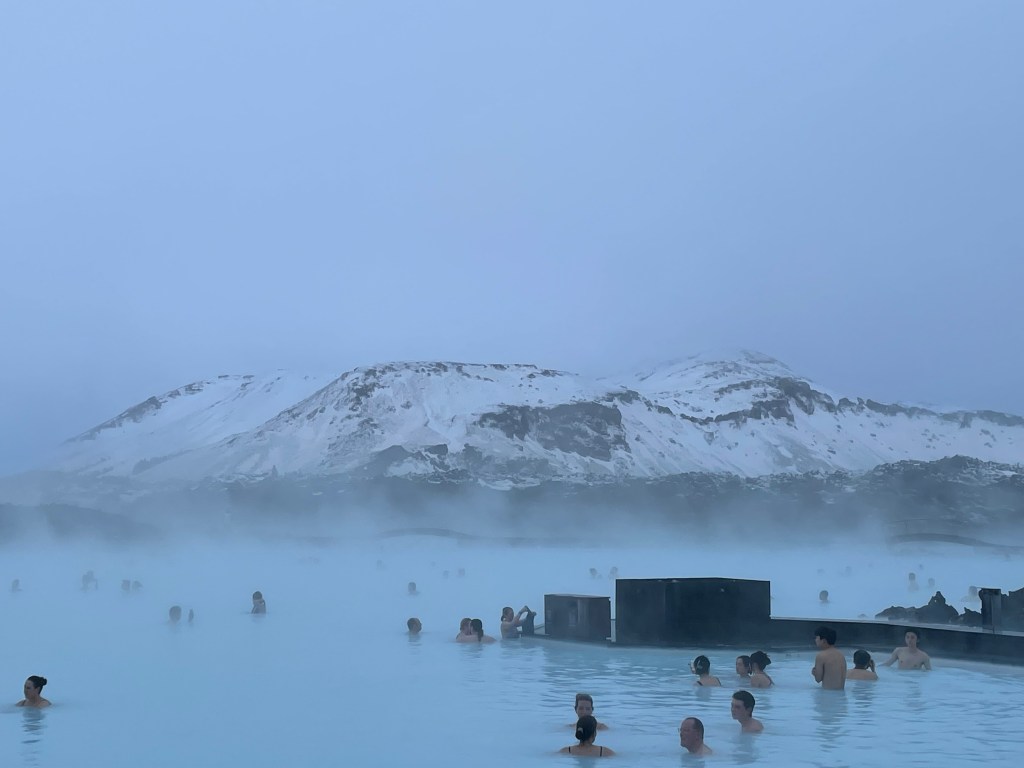
Iceland scrapes the Arctic Circle but (despite my best summoning), the lights weren’t out to play. Instead, on day one, after leaving my luggage in the city centre, I set off to the Blue Lagoon, fed by heat from the planet’s core. President Putin had his intercontinental warheads on standby. But, lying in a hot geothermal pool, sipping prosecco amidst snow-capped hills, it felt a good place to see-out the nuclear apocalypse.
That evening, back in Reykjavik, I was served a tasting menu of local delicacies. Starting with a shot of brennivín, it was on to smoked puffin in liqueur, minke whale and char, then horse carpaccio, ling and salted lamb, rounded off with a crowberry cheesecake, kókósbolla and an espresso.
On my arrival back home, I called the Speaker of the Icelandic Parliament, Birgir Ármannsson, to ask about his country’s perhaps unlikely position as a home of democracy. Iceland’s assembly, the Alþingi, started life in a field at Þingvellir, just outside Reykjavik.
“It’s a great honour to head something so ancient,” Ármannsson explained. “It’s the most important institution for Icelanders and has been in existence [albeit with a hiatus] since 930 AD.”
Iceland is unquestionably awesome. But only if you take out a mortgage to buy sandwiches. I think 1000 ISK works out around 7 quid, and that’s about the price of a hot dog. Shuttle buses take you down to coaches, taking you on ‘Golden Circle’ tours. The system turns this remote capital into something of a resort town.
Iceland is vast, too, though it doesn’t look it on the map (1,330km or so to drive around its national ring road). The set-up is informal (from outside the building, for example, you can look right into the prime minister’s office), but its position in the world – midway between Europe and America – has made it not only a geographer’s paradise, but a stopover for flights between two continents.
Looking at the Keflavík departures board now, I can see that about one half is for destinations in the European Union, the other for airports in the United States.
A version of this article has also been published in Epigram.
All photographs taken in Iceland by Fika Online.
 Fika
Fika 